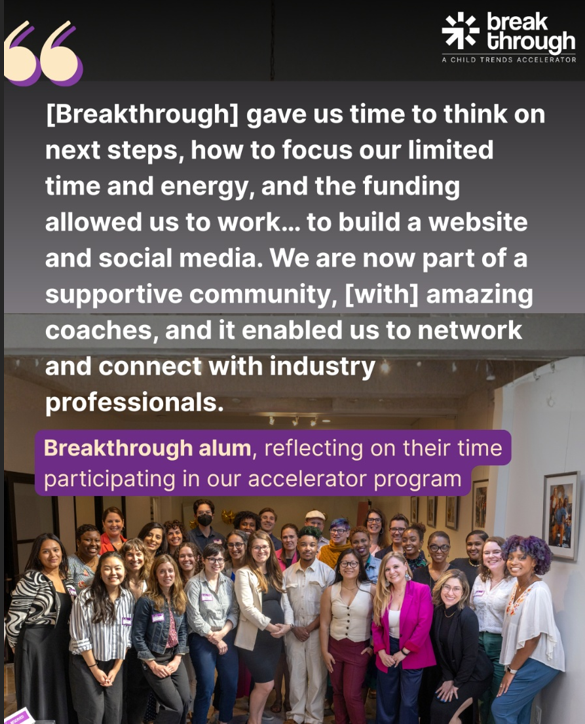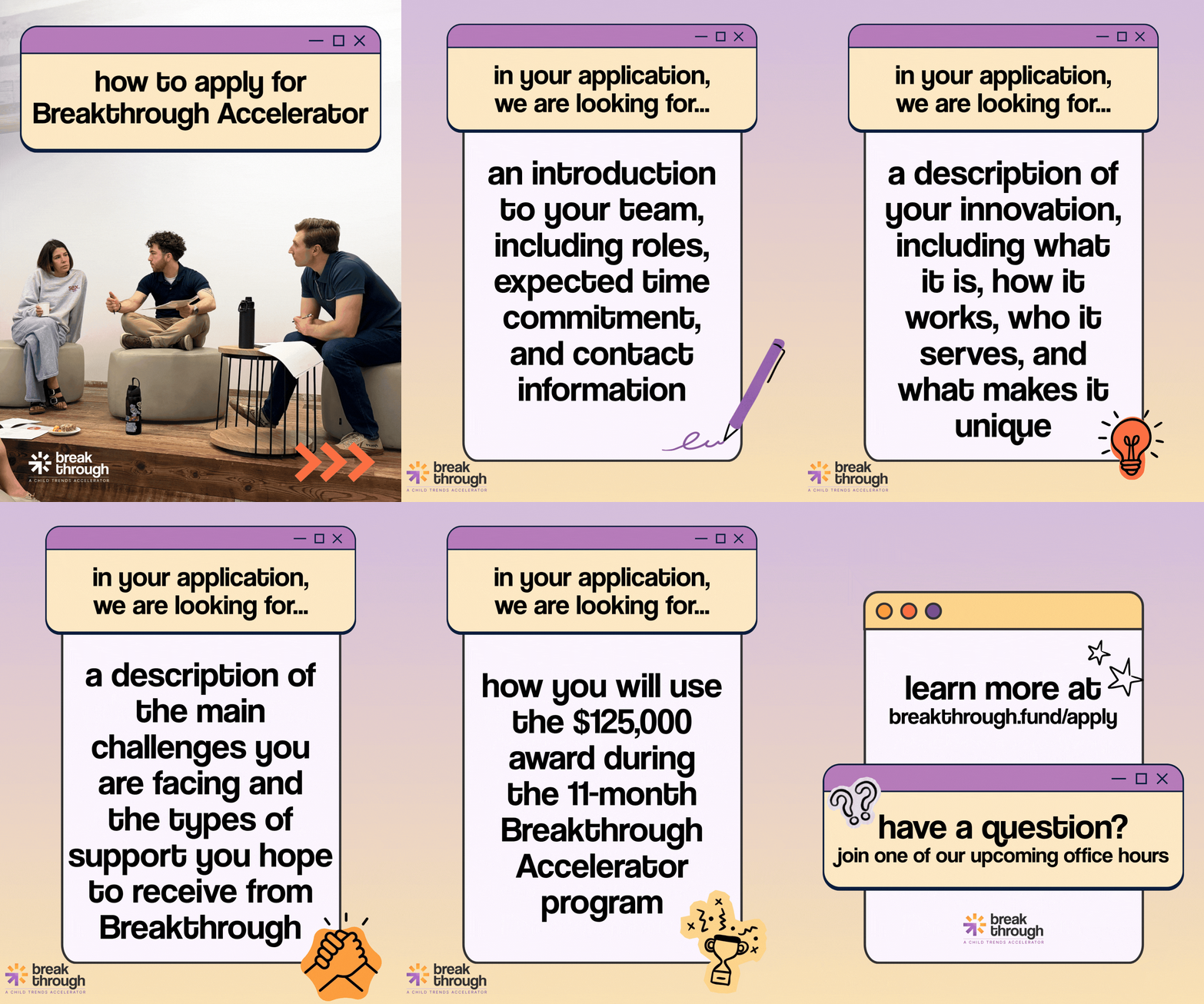



A clever meme; a photo that tells a story; an engaging blog post: Storytelling is a powerful method for sharing new or updated public health interventions. At Breakthrough Accelerator, we strive to develop creative communications that share the stories behind the scenes of our program and humanize the accelerator experience.
That creativity, however, is guided by a communications strategy based in data. After all, we aim to ensure that our content reaches the audiences who can benefit from it the most, where they already are, with information that they can actually use.
In Spring 2026, we developed a communications strategy for Breakthrough’s recruitment period that was successful at achieving these aims while guiding our creative pursuits. In fact, social media—a cornerstone of our strategy—was a top referral source for Breakthrough applicants in 2026! Because recruitment is a vital time for Breakthrough, this digital success is critical: We must reach a diverse range of potential applicants so they can apply for a chance to be in our next cohort of innovators. In this blog post, we’ll walk you through how we used data to guide our specific recruitment goals and what tactics we found worked well.
How We Used Strategy to Set Goals
As we wrote Breakthrough’s 2026 recruitment communications strategy, we looked at both broad and specific data to set our goals. We researched benchmarks for nonprofit organizations, drew on our experiences and data from previous recruitment cycles, and kept up with trends and expertise from science communications leaders.
Our first goal was to increase engagement—defined using specific goal metrics—with Breakthrough’s communications channels. For example, we aimed to see a 10 percent average engagement rate across all our recruitment-focused LinkedIn posts. We set our goal metrics based on trends in our monthly analytics,* aiming for slightly higher numbers since we wanted to reach new audiences and knew that recruitment season draws increased traffic. We also used our monthly analytics to identify which aspects (e.g., image type, caption length, subject matter) of our previous posts resonated best with our audiences and shaped our new content to align.
Our second goal was to convert new individuals viewing or interacting with our posts into Breakthrough followers. Again, recruitment season is the best opportunity for this given that we have something we can offer: a funded opportunity to work with Breakthrough! We set goals for increasing followers and engagement on LinkedIn, Instagram, and our newsletter; increasing traffic to our website; and, ultimately, the number of applications to Breakthrough we wanted to see. Attracting new followers directly led to finding new innovators that we could potentially fund.